
Two things separate a good day in Zion from a wasted one: whether you hold the permit you need, and whether the trail you drove for is actually open. Angels Landing runs on a lottery. The East Rim route to Observation Point has been closed by rockfall for years. The Narrows shuts down when the river runs high.
Most lists of the best Zion hikes skip all three. This guide covers seven trails, what each one demands, and the access rules as they stand. Fees are in US dollars and current as of September 16, 2026.
Before you pick among the best hikes in Zion National Park
Entry costs $35 per private vehicle, $30 per motorcycle or $20 per person on foot or bike, each valid for up to seven days. A Zion annual pass is $70 and the America the Beautiful pass is $80.
One rule catches international visitors off guard. Since January 2026, non-US residents aged 16 and over pay an extra $100 per person on top of the entrance fee at Zion and ten other parks, and their annual pass costs $250 rather than $80. Buy the pass before you arrive if it works out cheaper for your group.
Then there's the shuttle. From roughly March through November, private vehicles can't drive the Zion Canyon Scenic Drive, which is where most of these trailheads sit. The shuttle is free, needs no ticket, and runs nine stops from the visitor center to the Temple of Sinawava. In deep winter the road reopens to cars.
Trail | Distance | Time | Difficulty | Access |
|---|---|---|---|---|
Pa'rus | Paved, visitor center to Canyon Junction | 30 to 120 min | Easy, wheelchairs, bikes, dogs | Walk from visitor center |
Riverside Walk | 2.2 mi round trip | 1 to 2 hrs | Easy, paved | Shuttle stop 9 |
Lower Emerald Pool | 1.2 mi round trip | 1 to 2 hrs | Easy, paved but rough | Shuttle stop 5 |
Watchman | 3.3 mi round trip | ~2 hrs | Moderate, 479 ft gain | Walk from visitor center |
Angels Landing | Grotto to the summit | Half a day | Strenuous, exposed | Shuttle stop 6, permit required |
The Narrows, bottom-up | Up to 10 mi round trip | All day | Strenuous, in the river | Shuttle stop 9 |
Observation Point | Via East Mesa Trail | Most of a day | Moderate from the mesa | Drive to east plateau |
Angels Landing: you need a permit, and it's a lottery
Every hiker who wants to pass Scout Lookout and continue along the chains needs a permit. No exceptions for time of day or season.
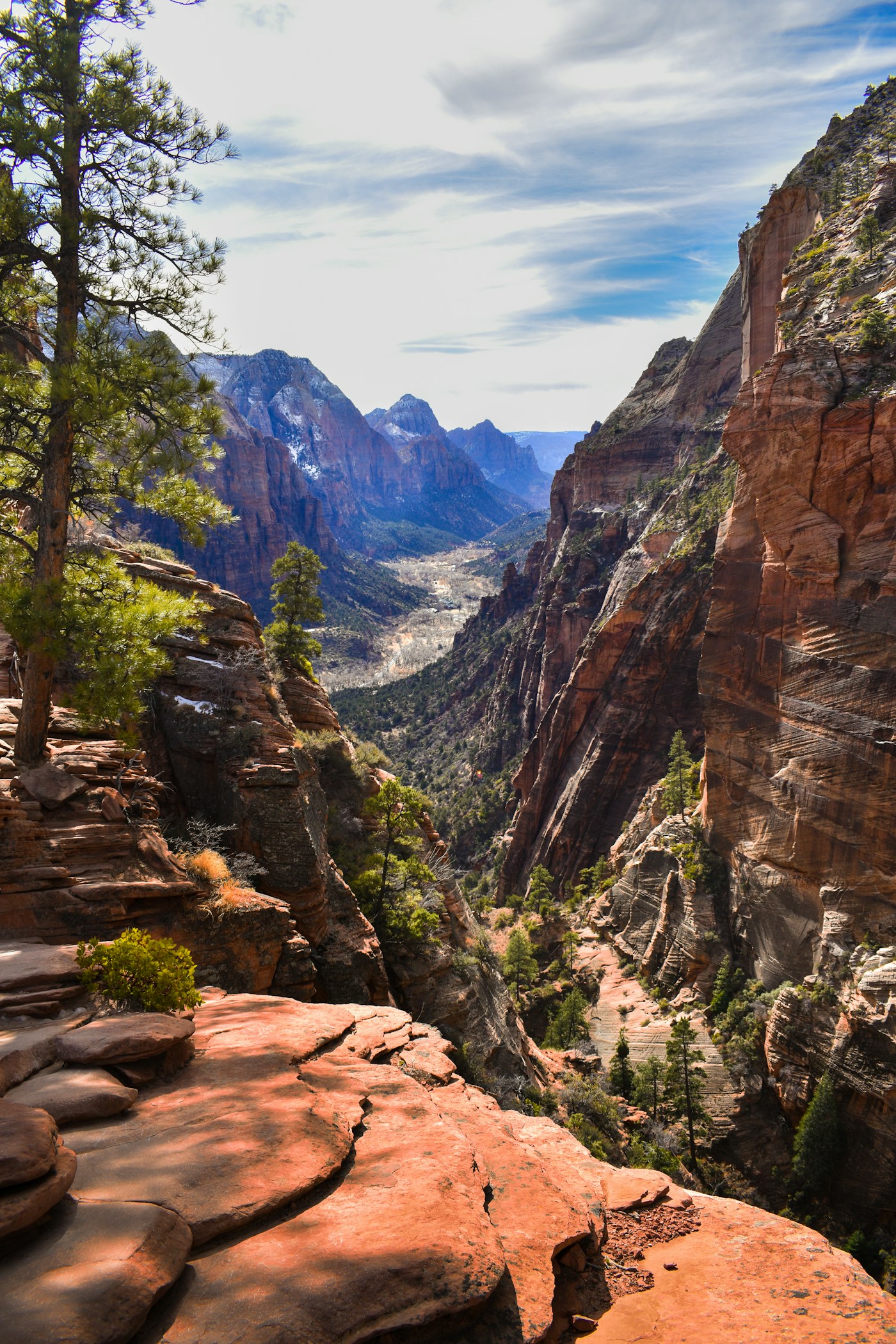
Permits come from two lotteries on Recreation.gov. Seasonal lotteries open on fixed dates, and the park published the 2026 schedule: February 13 for spring, April 1 for summer, July 1 for fall, October 1 for winter. If you miss those, the day-before lottery runs from 12:01 a.m. to 3 p.m. Mountain Time the day before your hike, with results by 4 p.m. Widely published guidance puts the cost at a $6 application fee plus $3 per person if you win. The park's own permit page was under maintenance at the time of writing, so treat those figures as unconfirmed.
Zion issues more than 200,000 of these permits a year, so the odds aren't hopeless. Apply for the day-before lottery on several consecutive days rather than pinning everything on one.
The trail earns the paperwork. The park started the permit system in April 2022 because crowding on the ridge had become a safety problem: sections are under three feet wide with drop-offs of up to 1,000 feet. If heights bother you, stop at Scout Lookout, which needs no permit and still delivers the view down the canyon.
The Narrows: the wettest of the best hikes in Zion National Park
You walk up the Virgin River between walls that close to twenty feet apart. The route is the water itself: current, round rocks and cold, unstable footing.
Going upstream from the Temple of Sinawava, you can hike as far as Big Spring without a permit, which the park describes as a strenuous ten-mile round trip taking all day. Most people don't go nearly that far, and they don't need to. An hour in the river gets you the experience.
Three conditions close it or make it dangerous. Flash floods are possible any time and most common during monsoon season, though they also happen during spring snowmelt. High, cold water arrives in winter and early spring, and the park typically closes the route when flow exceeds 150 cubic feet per second, often in April and May. Toxic cyanobacteria has been found in the Virgin River, so never drink the water, filtered or not.
Rent neoprene socks, canyoneering boots and a stick in Springdale. In colder months, rent the drysuit too.
Observation Point: check which route you mean
This is where planning goes wrong. The classic route climbed the East Rim Trail from Weeping Rock, and that route has been closed by rockfall for years. The Weeping Rock Trail itself and shuttle stop 7 reopened in September 2025 after repairs, but Hidden Canyon and the East Rim route to Observation Point stayed closed, and reporting through January 2026 says they remain so.
The way there now is the East Mesa Trail, reached by driving up to the east plateau on unpaved roads. It approaches from above, so the climbing is gentler, and the payoff is the view most people consider better than Angels Landing: you look down on Angels Landing from it.
Check the park's current conditions page before committing to either version.
Watchman: the one you can do without the shuttle
The Watchman Trail starts at the visitor center, which makes it the easiest of the best hikes in Zion National Park to fit around a shuttle schedule or a late arrival. NPS lists it at 3.3 miles round trip, about 479 feet of gain, roughly two hours.
It climbs a bench below the Watchman itself and looks back over Springdale and the lower canyon. Do it at sunset, when the light hits the cliffs and the heat drops.
Emerald Pools: the gentlest of the best hikes in Zion National Park
The Lower Emerald Pool Trail runs 1.2 miles round trip from Zion Lodge through pinyon and juniper to pools fed by seasonal waterfalls. The park rates it easy, notes the paving is rough, and asks people to stay out of the water, which wildlife depends on. Swimming isn't allowed.
It connects upward to the Middle and Upper pools and across to the Kayenta Trail, so you can extend it into a longer loop.
Riverside Walk: flat, paved, and the gateway to The Narrows
Two and a bit miles round trip from shuttle stop 9, paved the whole way, hanging gardens dripping off the walls. The paving gets irregular in places and there are minor drop-offs, so it isn't perfectly smooth, but it's the closest Zion gets to an accessible canyon walk.
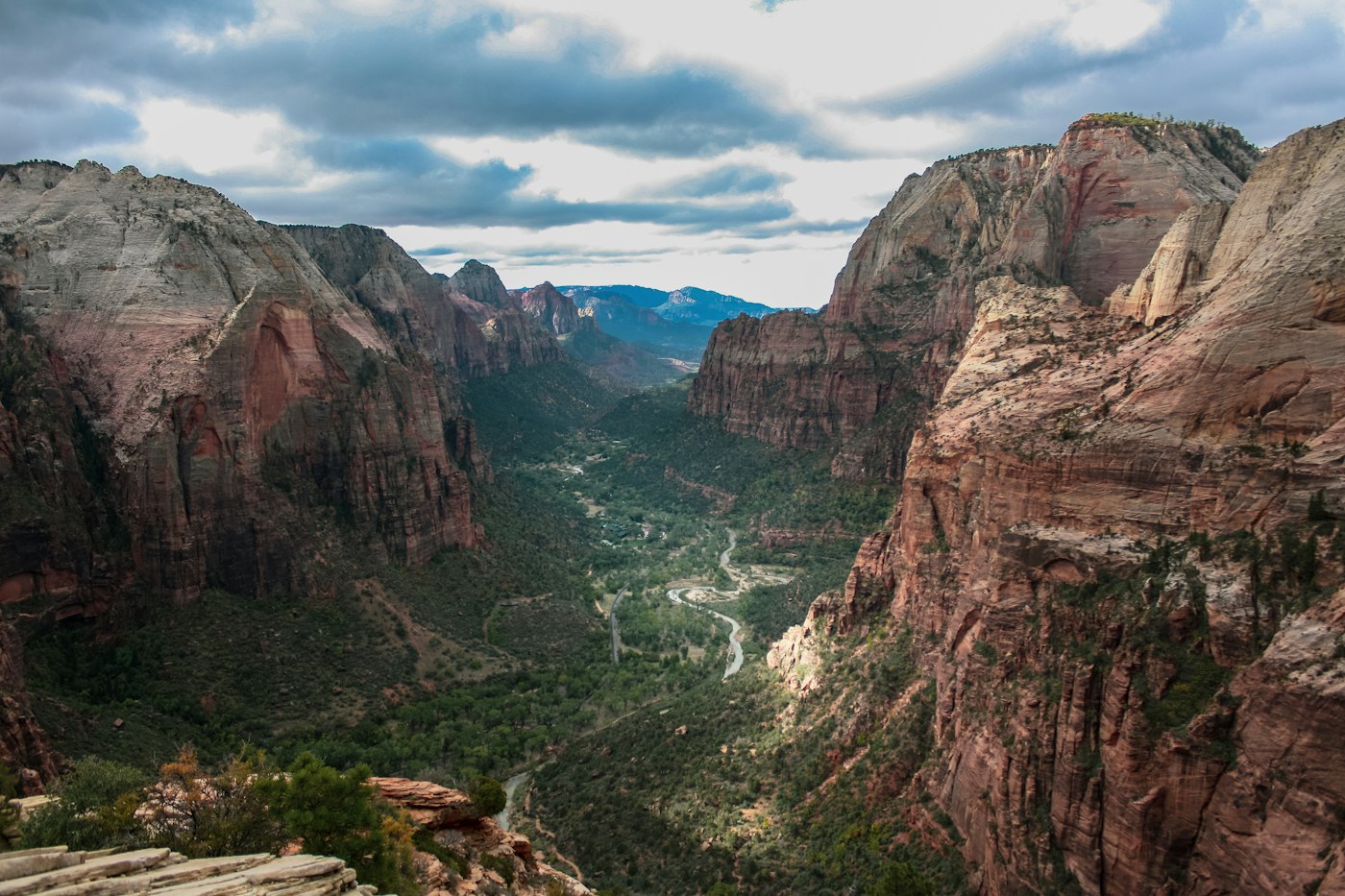
It ends where The Narrows begins. Plenty of people walk to that point, look at the river, and turn around satisfied.
Pa'rus: the only trail where dogs are welcome
Pa'rus is paved, follows the Virgin River from the visitor center to Canyon Junction, and takes 30 minutes to two hours depending on how often you stop. It's the one trail in the canyon that allows leashed dogs and bicycles, and it's wheelchair accessible.
For an evening walk with the Watchman lit up ahead of you, this beats anything that requires a shuttle seat.
Which of the best hikes in Zion National Park suits your day
First visit, one full day: Riverside Walk in the morning, then The Narrows as far as you feel like going, then the Watchman at sunset.
You have a permit: Angels Landing early, before the ridge fills and the rock heats up.
You're travelling with kids or anyone with mobility limits: Pa'rus, Riverside Walk and Lower Emerald Pool cover the scenery without the exposure.
You want the biggest view for the least fear: Observation Point from East Mesa.
You arrived without a plan and the shuttle line is long: walk the Watchman from the visitor center.
Rangers respond to a lot of preventable rescues here, and the park says so plainly. Carry more water than you expect to drink, watch the forecast for storms anywhere upstream, and treat any chain section as optional. The same planning rules apply elsewhere: our guide to Acadia hiking trails covers a $6 summit road reservation and seasonal falcon closures, and the best hikes in Oahu now hinge on where you can legally park.
Common questions about the best hikes in Zion National Park
Do I need a permit for the best hikes in Zion National Park?
Only Angels Landing beyond Scout Lookout, through a lottery. The Narrows bottom-up to Big Spring needs no permit, and neither do the other trails here.
Which of the best hikes in Zion National Park is hardest?
The Narrows as a full ten-mile round trip, because you spend the day walking on unstable rock in moving water. Angels Landing is shorter but far more exposed.
Can you hike Zion without the shuttle?
Yes. Watchman and Pa'rus both start at the visitor center, and in deep winter the Scenic Drive reopens to private vehicles.
What do the best hikes in Zion National Park cost?
Park entry only, at $35 per vehicle for up to seven days, plus the Angels Landing permit fee if you win one. Non-US residents 16 and over pay an extra $100 per person.


